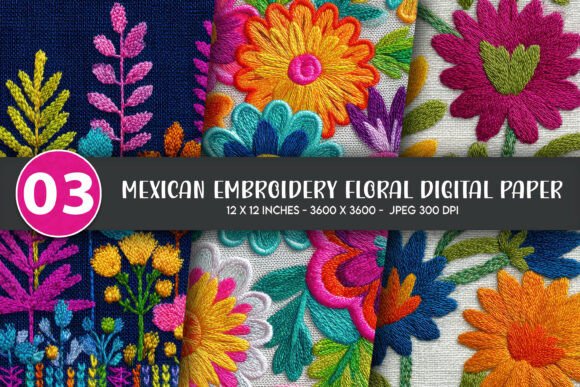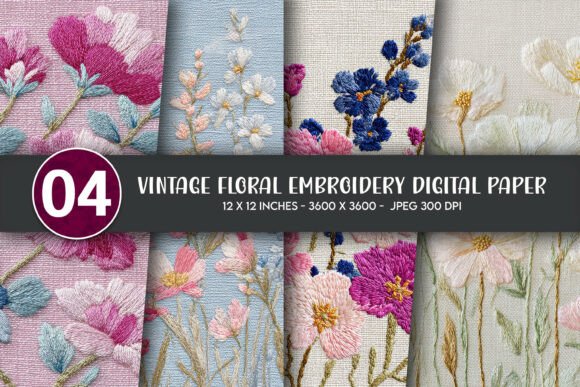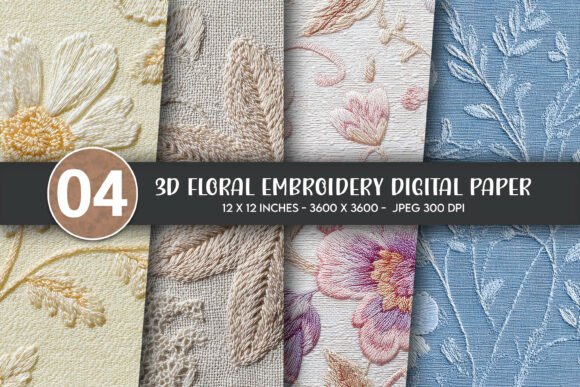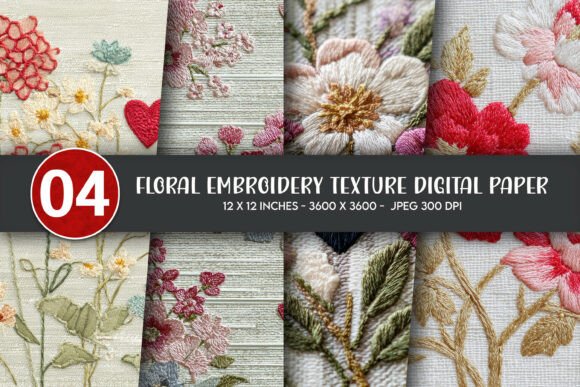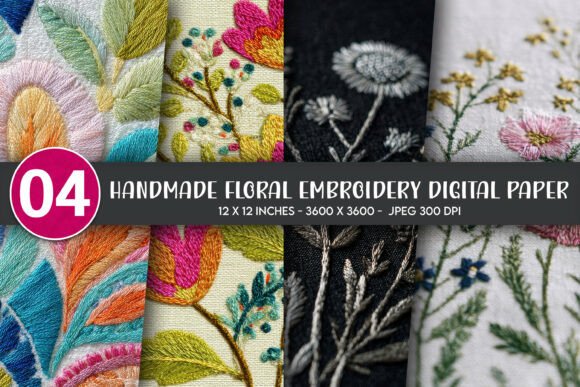
Reviewing Handmade Floral Embroidery Digital Paper
As a designer who has spent years translating digital concepts into tangible thread, I approach every new asset with a mix of curiosity and skepticism. We have all been there: downloading a beautiful digital embroidery file that looks stunning on screen, only to find it turns into a puckered mess or an indistinguishable blob once the needle hits the fabric. Today, I am taking a close look at Handmade Floral Embroidery Digital Paper, evaluating not just its aesthetic appeal, but its practical viability for real-world projects.
This asset falls under the category of Illustrations and Graphics, but for us in the trade, it represents potential inventory. The description promises versatility, citing use for wall decor, apparel, and home goods. But does it hold up under the tension of a hoop? Let’s break it down from the perspective of someone who needs to deliver a flawless finished product to a paying customer.
First Impressions and Visual Personality
The first thing that strikes me about Handmade Floral Embroidery Digital Paper is its organic mood. Unlike rigid, geometric vector art, this design carries a softness that mimics the irregular beauty of hand-stitched work. For an Etsy seller or craft business owner, this is crucial. Modern buyers are increasingly drawn to items that feel authentic and human-made, even if they are produced using computerized machines.
The layout appears balanced, avoiding the common pitfall of overly dense centers that cause fabric distortion. The floral elements seem to breathe, leaving negative space that allows the texture of the underlying material to show through. This is vital for maintaining the integrity of the fabric texture, especially when working with natural fibers like linen or cotton canvas. The visual personality suggests warmth and nostalgia, making it an ideal candidate for heritage-style branding or cozy home accents.
Real-World Application: The Tote Bag Test
To truly understand how this design performs, I mentally walked through a recent client request: a set of custom reusable tote bags for a local botanical shop. The client wanted something elegant but durable, capable of withstanding weekly grocery runs while still looking chic. Handmade Floral Embroidery Digital Paper felt like the perfect fit for this tote bag design.
In this scenario, the scale of the floral motifs would need to be adjusted to fit a standard 5x7 or 6x10 hoop. Because the design relies on illustrative qualities rather than photorealistic shading, it translates well to embroidery. I envisioned using a combination of satin stitch for the petal edges to give them definition, and a lighter fill stitch for the centers to keep the weight down. This approach ensures the bag remains flexible and doesn’t become stiff or board-like, a common complaint with poorly optimized machine embroidery design files.
Beyond totes, this asset shines in sweatshirt embroidery. The soft, flowing lines complement the drape of fleece or French terry cloth. When applied to a chest pocket or sleeve, it adds a boutique touch without overwhelming the garment. It also works beautifully for baby embroidery on onesies, provided the stitch density is reduced to prevent irritation against sensitive skin.
Navigating Technical Challenges
While the aesthetic is strong, we must address the technical realities. Not every surface is forgiving. If you plan to use this design on stretchy fabric like jersey knits for t-shirts, stabilization is non-negotiable. I recommend a cut-away stabilizer to provide permanent support, as the floral details may pull or distort over time with wash-and-wear cycles.
Another consideration is thread colors. Since this is an illustration-based graphic, contrast is key. On dark fabrics, you will need to ensure your thread palette pops. A muted pastel thread on navy blue might get lost. I always advise running a test stitch-out on scrap fabric of the same weight and color before committing to the final piece. This helps you verify if the stitch density is appropriate or if you need to lighten the fill areas to prevent puckering.
Be cautious with small hoop sizes. If you shrink this design too much to fit a 4x4 hoop for an embroidered patch or cap front, the finer details of the petals and leaves may merge together. The running stitch outlines, if present, need enough space to be visible. Always check the smallest elements in your software’s simulation mode before hitting start.
Commercial Value and Brand Consistency
For small shop product lines, consistency is everything. Handmade Floral Embroidery Digital Paper offers a cohesive look that can be adapted across various items. Imagine offering a matching set: a throw pillow with the full design, a kitchen towel with a simplified version, and a tote bag with a corner accent. This cross-product consistency builds customer trust and enhances brand consistency.
Furthermore, this asset is not limited to physical stitching. As a high-resolution graphic, it serves excellently as a printable mockup for your online store. You can overlay the design on product photos to show customers what the personalized gift will look like before they buy. This reduces return rates and increases buyer confidence. Whether used for holiday embroidery gifts or year-round commercial embroidery jobs, the versatility adds significant value to your design assets library.
Practical Designer Notes
Before you integrate this into your workflow, keep these practical tips in mind:
- Test on Scrap Fabric: Never skip this step. Check for puckering, thread breaks, and color accuracy.
- Check Licensing: The description mentions commercial use for items like mugs and shirts, but always confirm the specific license terms for digital resale versus physical product sales.
- Adjust Density: If the default file feels too heavy for lightweight fabrics, manually reduce the fill density in your editing software.
- Contrast Check: View the design in black and white to ensure the shapes remain distinct without color reliance.
- Stabilizer Choice: Match your stabilizer to your fabric. Tear-away for stable wovens, cut-away for knits.
In conclusion, Handmade Floral Embroidery Digital Paper is a robust resource for designers who value both aesthetics and functionality. It bridges the gap between digital illustration and tactile craft, offering a versatile solution for custom apparel, home decor, and gift items. By respecting the technical limitations of embroidery and applying thoughtful preparation, you can transform this digital asset into a high-value handmade product that resonates with customers. It is not just a file; it is a foundation for creative entrepreneurship.